The Ultimate LED Neon Sign Guide (2026)
Share
Last updated: August 2026
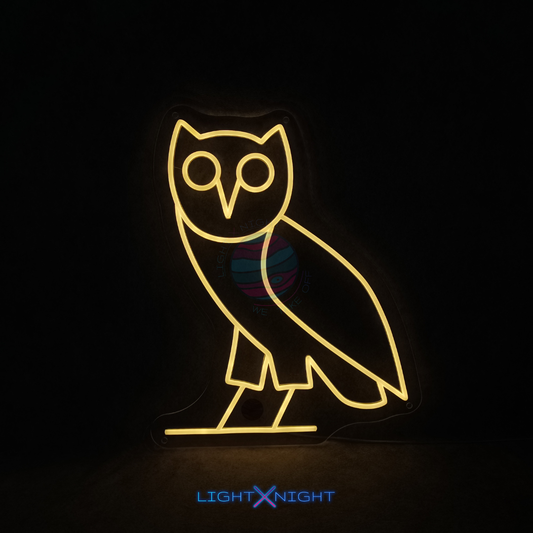
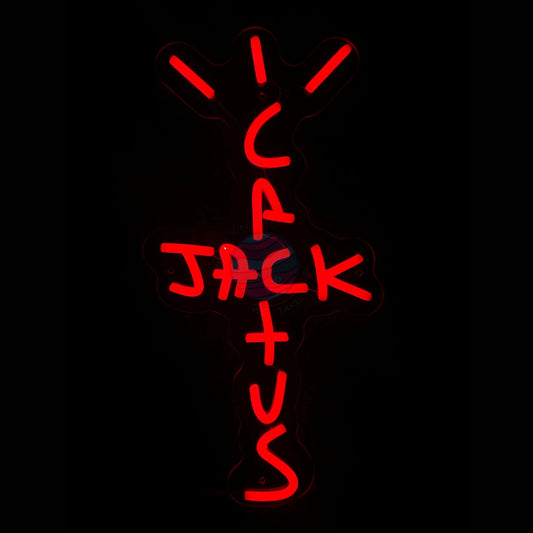
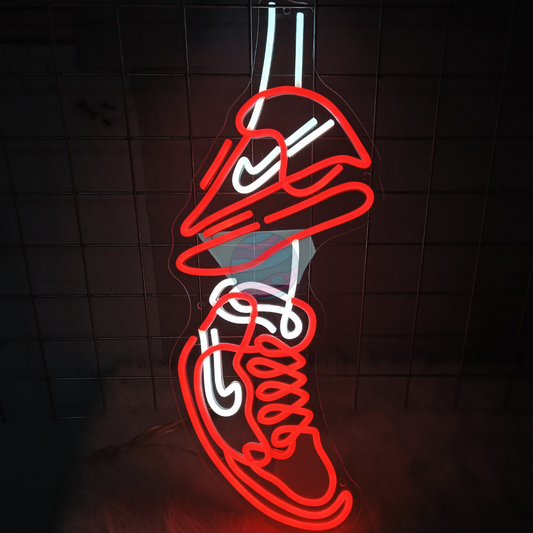
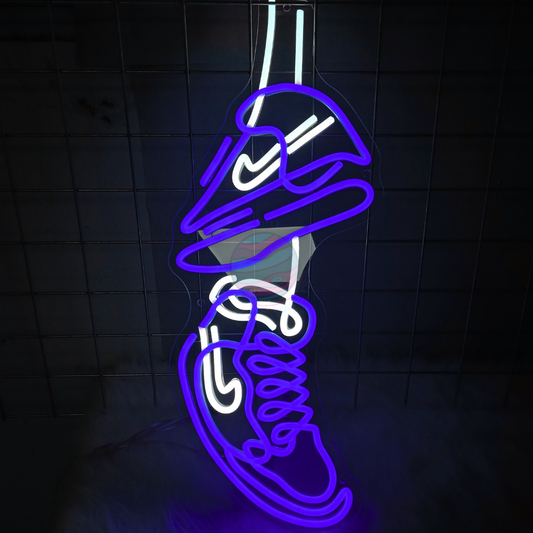
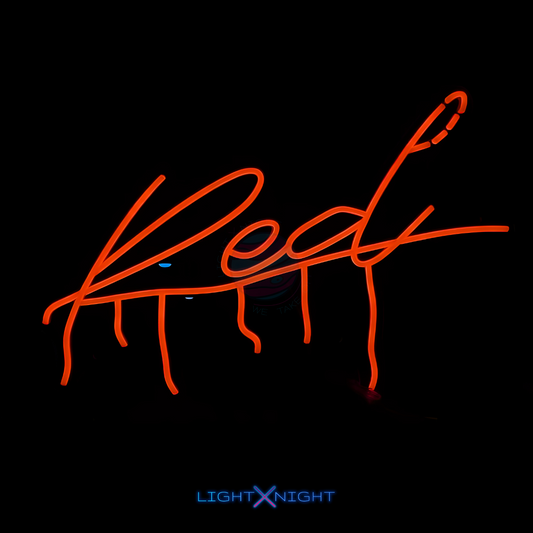
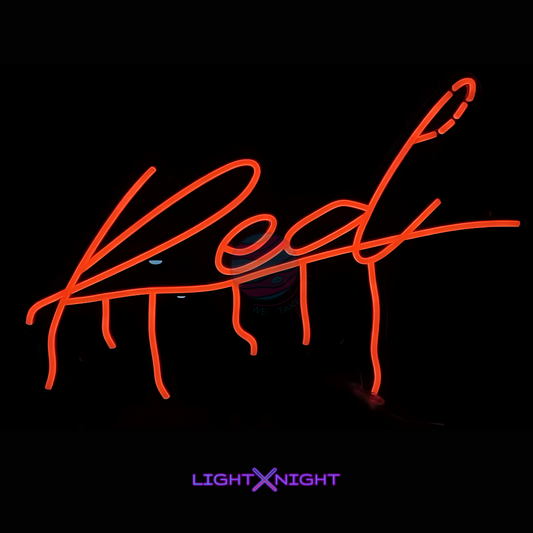
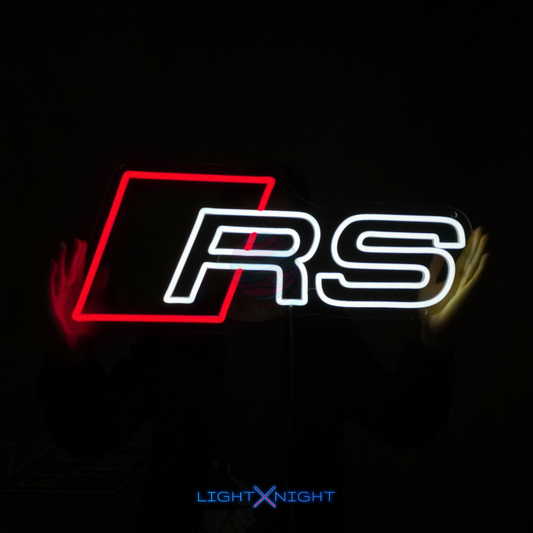
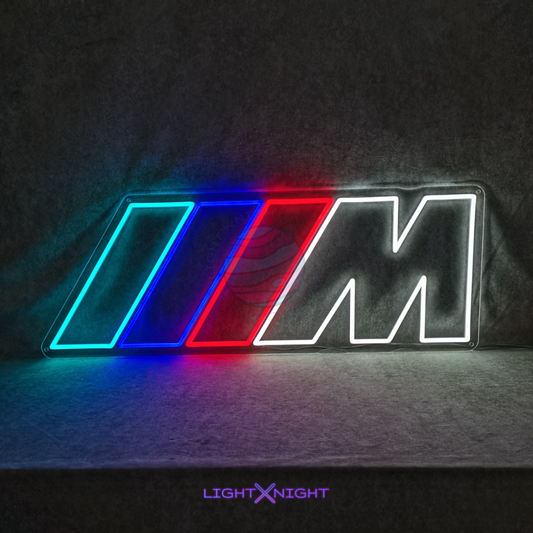
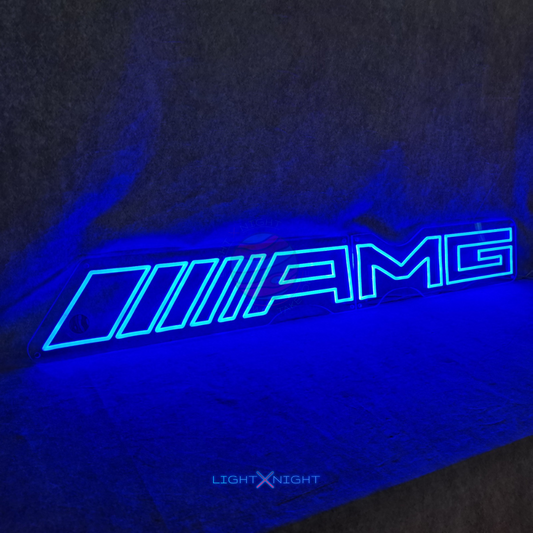
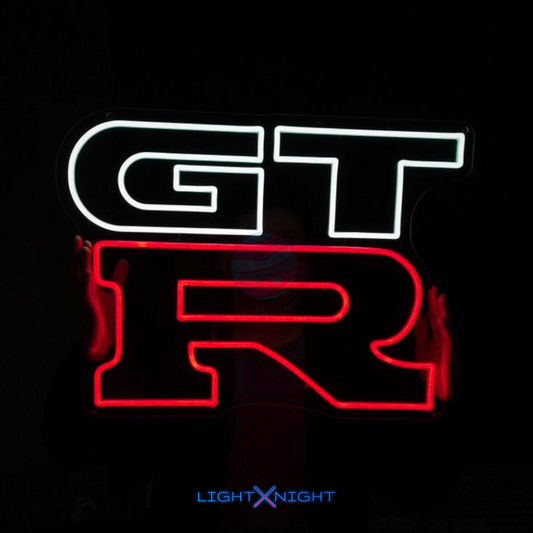
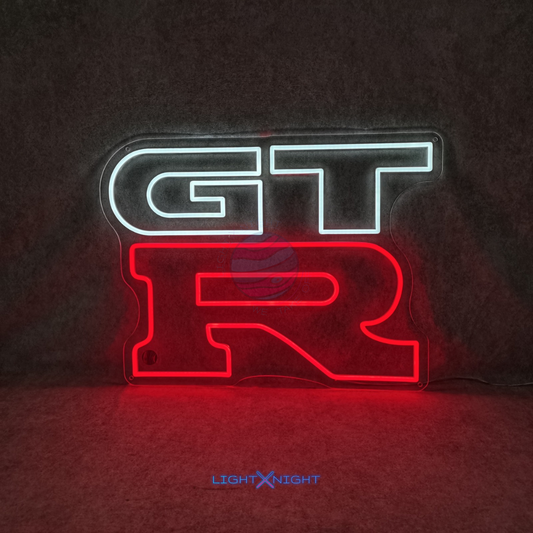
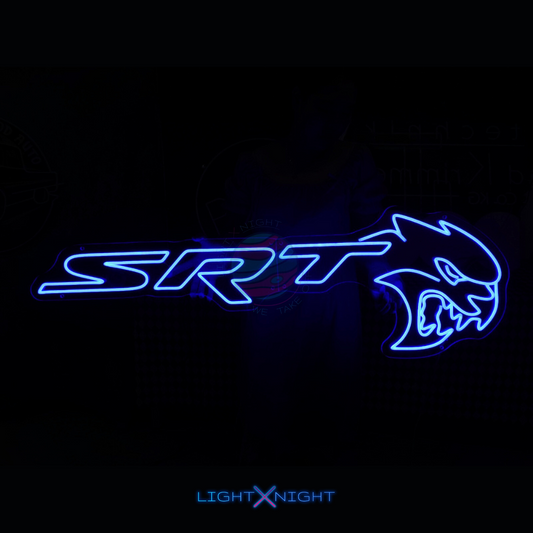
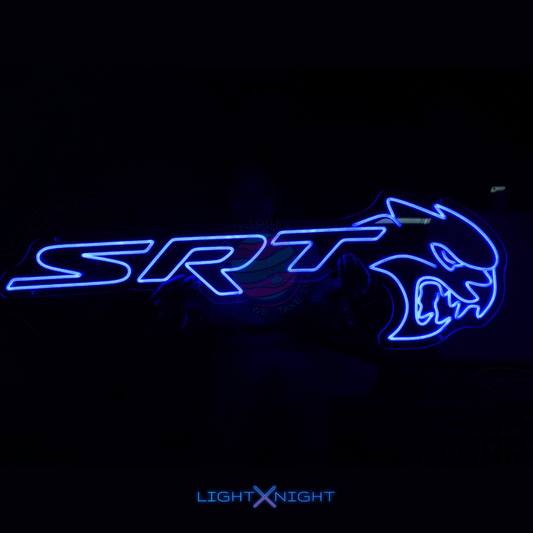
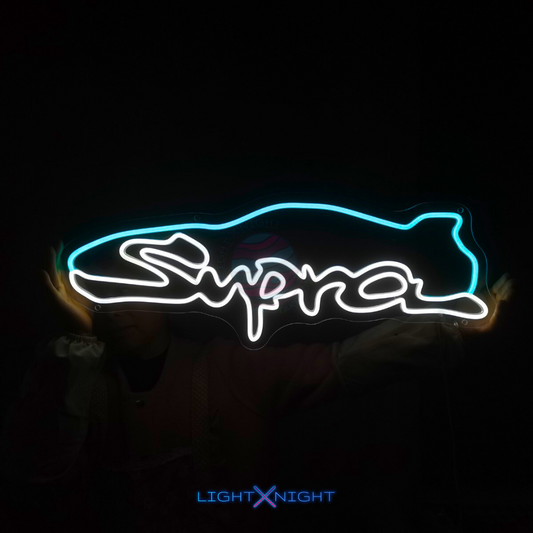
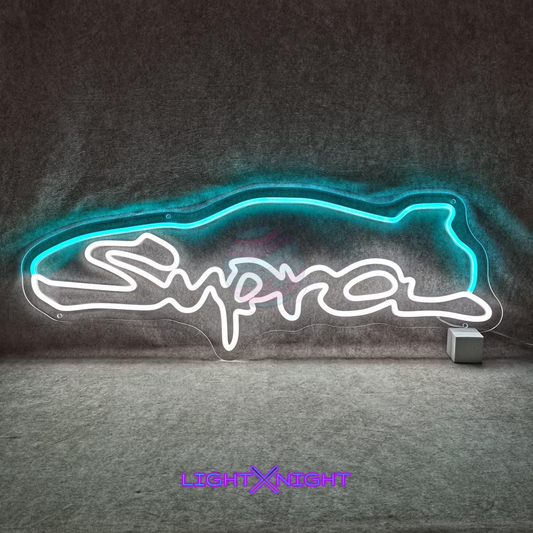
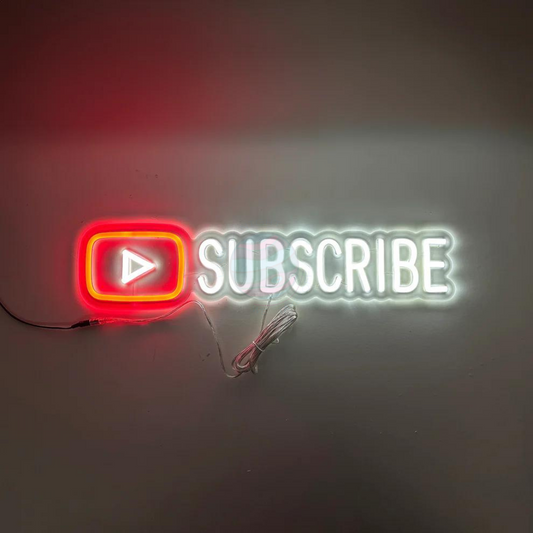
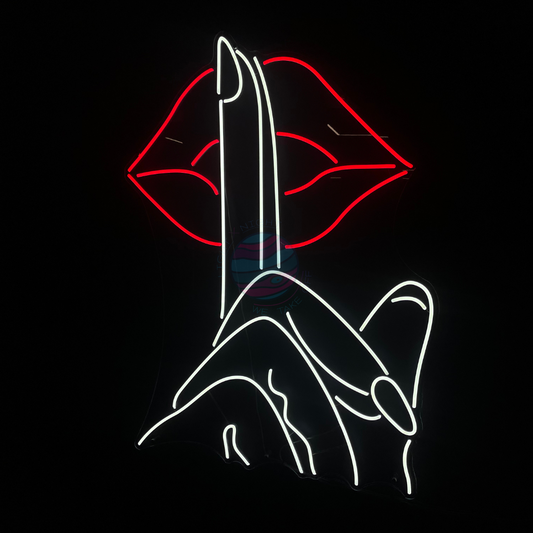
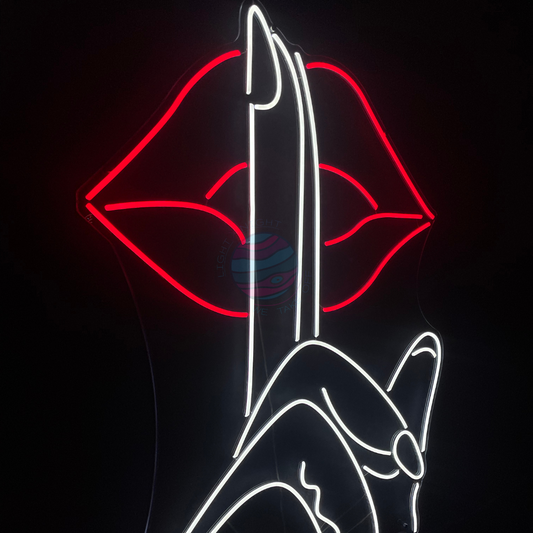
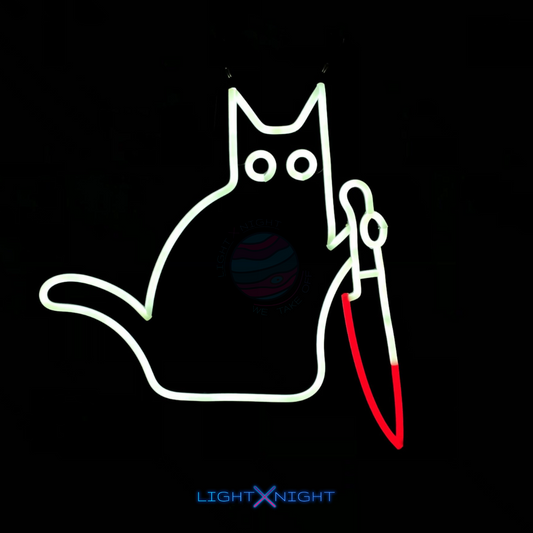
LED neon signs combine the unmistakable glow of classic neon with modern, low-voltage LED technology. They can be shaped into words, logos, symbols and detailed artwork, making them useful for homes, garages, gaming rooms, events and businesses.
This guide explains what an LED neon sign is, how it works, how it is made, how much electricity it may use, how long it can last, how to install and maintain it, and what to check before ordering a custom sign.
LED neon signs: the quick answer
An LED neon sign uses rows of light-emitting diodes inside a flexible silicone or PVC diffuser to create a smooth, continuous line of light. Unlike traditional neon, it does not rely on fragile gas-filled glass tubes or very high operating voltage. A complete sign usually includes the illuminated tubing, a shaped acrylic backboard, wiring and a compatible power supply.
Key takeaways
- LED neon is generally lighter, more impact-resistant and easier to customize than glass neon.
- The sign normally operates at low DC voltage through an external power supply.
- Actual brightness, power consumption and lifespan depend on the LEDs, diffuser, power supply, design and operating environment.
- An indoor sign should not be assumed to be weatherproof. Outdoor use requires a product specifically designed and rated for it.
- A high-quality custom sign depends as much on design, wiring, heat management and assembly as it does on the LED strip itself.
Table of contents
- What is an LED neon sign?
- How LED neon works
- Main components and materials
- How custom LED neon signs are made
- LED neon vs. traditional glass neon
- Colors, brightness and controls
- Indoor vs. outdoor signs
- Power consumption and running cost
- Lifespan and reliability
- Safety
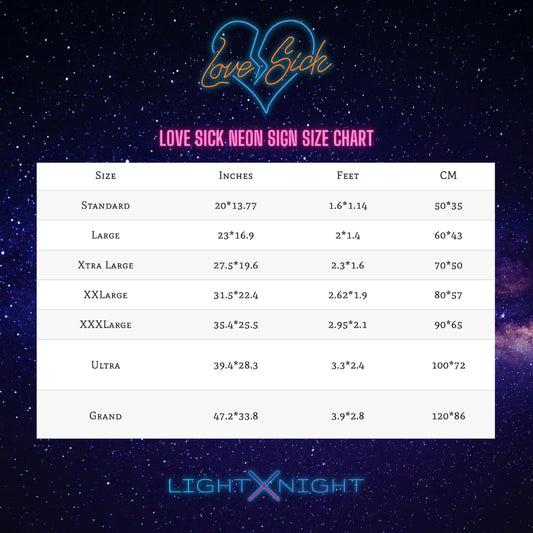
- Choosing the right size
- Installation
- Cleaning and maintenance
- Customization options
- Buyer’s checklist
- Frequently asked questions
1. What is an LED neon sign?
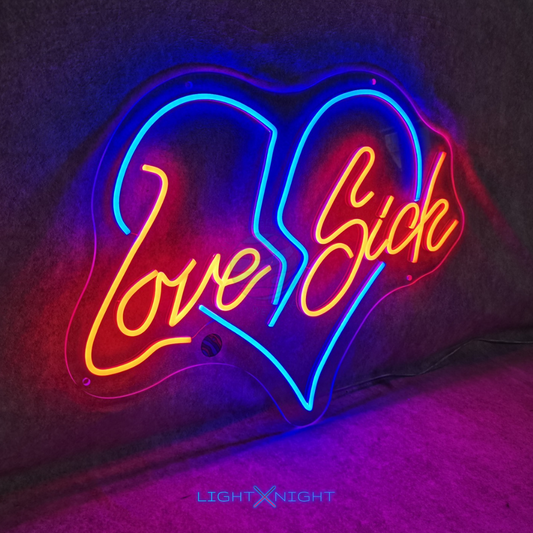
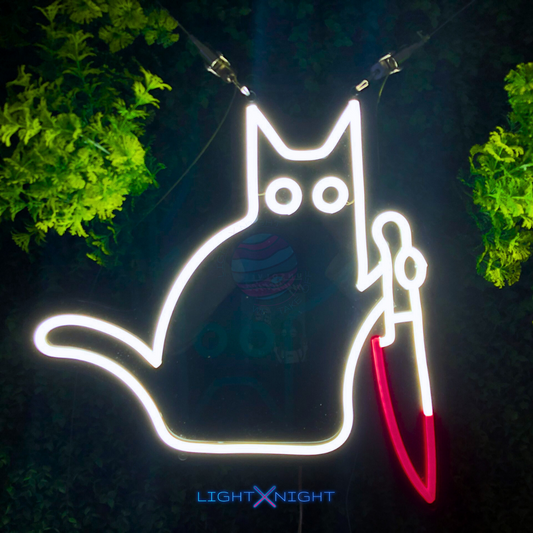
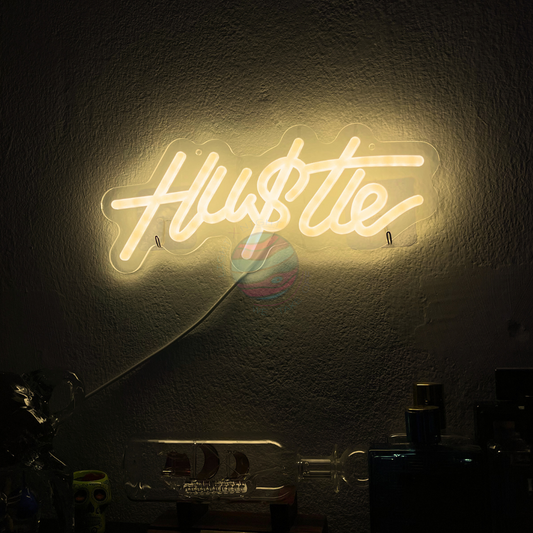
An LED neon sign is a decorative or commercial light fixture designed to imitate the continuous glow of traditional neon. Instead of heating gas inside bent glass tubes, it uses many small LEDs placed closely together inside a light-diffusing jacket.
The diffuser blends the individual light points into one smooth line. That is why a well-made sign looks like a single illuminated tube rather than a row of separate LEDs.
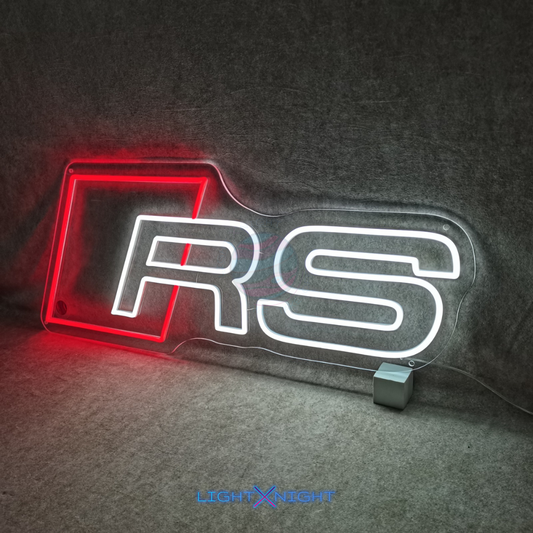
LED neon can be formed into letters, outlines and curves, then mounted to an acrylic backboard that supports the design. The result is usually thinner, lighter and less fragile than traditional glass neon.
2. How does LED neon work?
Electricity from a wall outlet first passes through a compatible power supply. The power supply converts household AC electricity into the low-voltage DC electricity required by the sign. The LEDs then emit light inside the flexible diffuser.
The main steps are:
- The wall outlet supplies AC electricity.
- The power supply converts it to the voltage required by the sign.
- Electricity flows through the LED circuit.
- The LEDs produce light.
- The silicone or PVC jacket spreads that light evenly.
A dimmer or controller may be installed between the power supply and the sign. Depending on the system, it can adjust brightness, select colors or activate lighting effects.
3. Main components and materials
LED light source
The LEDs determine much of the sign’s brightness, efficiency, color consistency and long-term performance. Closely spaced LEDs generally create a smoother line of light, while good circuit design helps reduce visible dark spots and uneven brightness.
Flexible diffuser
The outer tube is commonly made from silicone or PVC. Its job is to protect the LEDs, shape the light and create the familiar neon appearance. Silicone is often selected for its flexibility, heat resistance and smooth diffusion, although the exact material varies by manufacturer and application.
Acrylic backboard
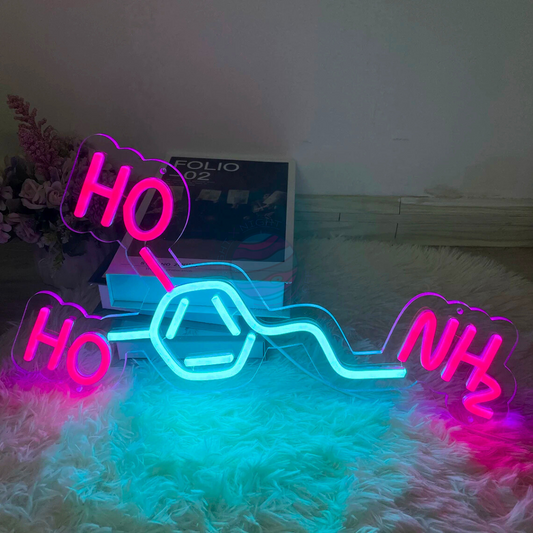
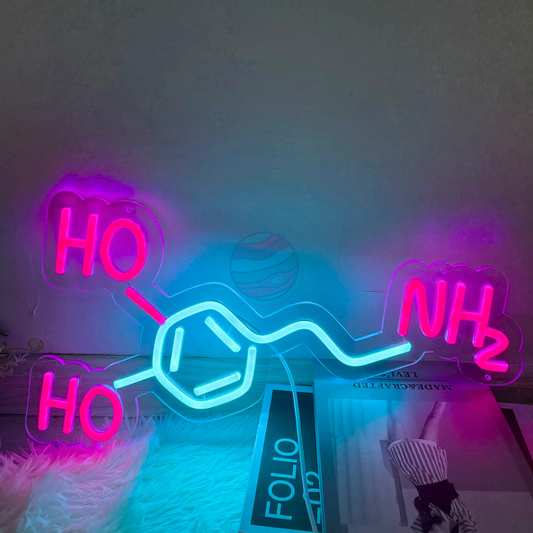
The acrylic panel supports the neon tubing and gives the sign structure. It may be clear, colored, frosted or printed. Common backboard shapes include:
- Cut to shape: follows the outer contour of the design.
- Cut to letter: closely follows individual letters or elements.
- Rectangle or square: gives the sign a clean, framed appearance.
- Custom printed backboard: combines printed graphics with illuminated elements.
Wiring and connectors
Wiring joins the illuminated sections and connects the sign to its power supply. Good cable routing keeps the front clean and reduces stress on solder joints and connectors.
Power supply
The power supply must match the sign’s voltage and provide enough capacity for its electrical load. An undersized or poor-quality unit can cause flickering, excessive heat, reduced brightness or premature failure.
4. How are custom LED neon signs made?
Custom LED neon production combines digital design with hand assembly. The exact process differs between manufacturers, but a professional workflow usually follows these stages:
- Design preparation: artwork is converted into practical neon paths, with attention to legibility, curves, spacing and electrical connections.
- Size confirmation: the design is scaled to its final dimensions. Very small details may need to be simplified.
- Backboard cutting: the acrylic is cut to the selected shape, including mounting holes and cable exits where required.
- Neon preparation: flexible neon is measured and cut for each illuminated section.
- Assembly: the neon is shaped and fixed to the acrylic, generally by hand.
- Electrical connection: sections are wired, soldered and insulated.
- Testing: the sign is checked for correct color, even illumination, dimming and electrical stability.
- Quality control: the acrylic, wiring, finish and overall appearance are inspected.
- Protective packaging: the sign is secured to reduce movement and impact during shipping.
Hand assembly matters because even a digitally accurate design can look poor if curves are uneven, spacing changes unexpectedly or wiring is visible from the front.
5. LED neon vs. traditional glass neon
| Feature | LED neon | Traditional glass neon |
|---|---|---|
| Light source | LEDs inside a diffuser | Electrified gas inside glass tubing |
| Typical operating system | Low-voltage DC after a power supply | High-voltage transformer system |
| Impact resistance | Generally higher | Glass tubes are fragile |
| Weight | Usually lighter | Often heavier |
| Heat at the illuminated tube | Usually low | Varies; transformer and tubes can become warm |
| Design flexibility | Strong for logos, lettering and portable signs | Excellent traditional glow, but requires skilled glass bending |
| Maintenance | Usually limited | May require specialist repair |
| Brightness control | Often easy with a compatible dimmer | Depends on transformer and installation |
| Best suited for | Homes, events, businesses, branded displays and custom decor | Authentic vintage installations and traditional neon artwork |
Neither technology is automatically “better” for every use. Glass neon offers a distinctive traditional character. LED neon is often preferred when lower weight, easier handling, flexible controls and reduced fragility are priorities.
6. Colors, brightness and controls
Single-color signs
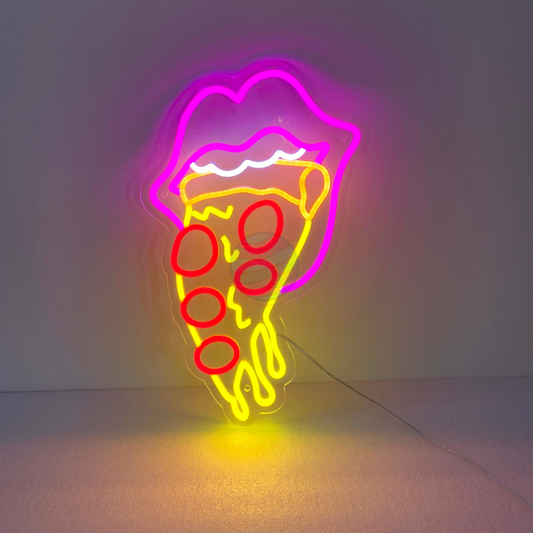
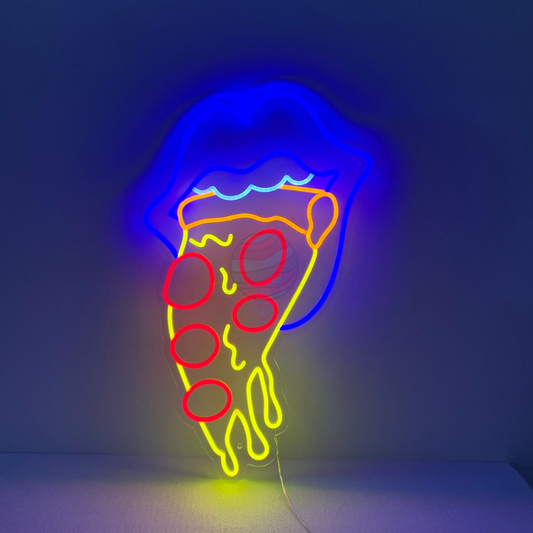
A single-color sign uses LEDs designed to produce one consistent color. Common options include warm white, cool white, red, orange, yellow, green, blue, pink and purple.
RGB signs
RGB systems mix red, green and blue channels to create multiple colors. They usually require a compatible controller. Because mixed RGB white is created from several color channels, it may look different from the white produced by dedicated white LEDs.
Brightness
Brightness is affected by LED output, LED spacing, tube dimensions, diffuser material, color and the room’s ambient light. A sign that looks very bright in a dark bedroom may appear more subtle in direct daylight.
Dimmers and remotes
A dimmer is useful because maximum brightness is not always the best setting. Lower brightness can be more comfortable at night, improve photography and reduce unnecessary power use. Controls must be compatible with the sign’s voltage and wiring system.
7. Indoor vs. outdoor LED neon signs
An indoor LED neon sign should not be exposed to rain, standing water or uncontrolled outdoor conditions unless the product is specifically designed for that use.
Outdoor signs require more than water-resistant tubing. The complete system must be considered, including:
- Sealed illuminated sections and cable entry points
- Weather-resistant connectors
- A suitable power supply location or enclosure
- UV and temperature exposure
- Drainage and mounting method
- A documented ingress-protection rating where applicable
An IP rating describes protection against solids and water under defined test conditions. It does not mean a product is suitable for every outdoor environment. Always follow the exact rating and installation requirements supplied with the sign.
8. How much electricity does an LED neon sign use?
There is no single wattage for every sign. Consumption depends on the total length of illuminated tubing, LED type, brightness setting, color and power-system efficiency.
You can estimate energy use with this formula:
Energy used in kilowatt-hours = watts ÷ 1,000 × hours used
Example: a 40-watt sign used for 6 hours per day:
40 ÷ 1,000 × 6 = 0.24 kWh per day
Over 30 days, that equals approximately 7.2 kWh. Multiply that figure by your local electricity rate to estimate the monthly cost.
| Example power | Daily use | Approx. monthly energy |
|---|---|---|
| 20 W | 5 hours | 3 kWh |
| 40 W | 6 hours | 7.2 kWh |
| 80 W | 8 hours | 19.2 kWh |
These are calculation examples, not fixed ratings for a particular product. Use the stated wattage of your sign or power supply for a more accurate estimate.
9. How long do LED neon signs last?
A quality LED neon sign can operate for many years, but lifespan should not be reduced to one universal number. Manufacturers may publish LED ratings measured under controlled conditions, while the complete sign also depends on its power supply, solder joints, wiring, heat, humidity and usage pattern.
Factors that can affect service life include:
- LED and circuit quality
- Power-supply quality and correct sizing
- Operating temperature and ventilation
- Brightness setting and daily operating hours
- Moisture, UV exposure and dust
- Repeated bending, impact or cable strain
- Quality of soldering and insulation
LEDs often become gradually dimmer rather than suddenly stopping. A failed power supply, connector or isolated section does not necessarily mean the entire sign has reached the end of its usable life.
10. Are LED neon signs safe?
Properly designed LED neon signs are generally suitable for normal decorative use. They typically operate at low voltage after the external power supply, contain no fragile gas-filled glass tubing and produce relatively little heat at the illuminated surface.
Safe use still requires basic precautions:
- Use only the supplied or correctly specified power supply.
- Do not use damaged cables, plugs or connectors.
- Keep indoor-rated components away from water and moisture.
- Do not cover the power supply or place it where heat cannot escape.
- Secure the sign so it cannot fall or pull on its cable.
- Disconnect power before cleaning or inspecting it.
- Use a qualified electrician for hardwired or permanent mains-voltage work.
Children and pets should not be allowed to pull on wiring, controllers or the sign itself.
11. How to choose the right sign size
The best size depends on viewing distance, wall width, design complexity and the role of the sign. A bedroom accent can be relatively compact, while a business logo must remain legible from farther away.
Measure the available area
Measure the usable wall or display area, not the entire room. Leave visual breathing space around the design rather than filling every centimeter.
Consider design proportions
Sign sizes are often listed by the longest dimension. A wide wordmark and a circular logo with the same listed width can have very different heights and visual impact.
Check minimum detail size
Thin strokes, tight corners and small gaps may not translate perfectly into flexible neon. A larger sign usually allows cleaner curves and better spacing.
Test the size before ordering
Mark the proposed dimensions on the wall with removable tape or create a paper template. View it from the main entrance, seating position or customer viewing distance.
12. How to install an LED neon sign
Installation depends on the backboard and mounting hardware. Common methods include wall standoffs, screws, hanging chains or cables, and manufacturer-approved supports.
Typical wall-mounting process
- Place the sign against the wall and level it.
- Mark the mounting-hole positions.
- Check for hidden wiring, pipes and unsuitable wall areas.
- Select anchors and screws suitable for the wall material and sign weight.
- Install the mounting hardware.
- Attach the sign without overtightening the acrylic.
- Route the cable so it is not pinched or under tension.
- Connect the controller and power supply in the correct order.
- Test brightness and all control functions.
Do not rely on adhesive strips unless the sign manufacturer specifically approves them for the sign’s weight, backboard and wall surface. Acrylic can crack if mounting hardware is overtightened.
13. Cleaning and maintenance
LED neon signs usually require little maintenance. Dust removal and occasional inspection are generally enough for an indoor sign.
Cleaning steps
- Switch off and unplug the sign.
- Allow the power supply to cool.
- Remove loose dust with a soft, dry microfiber cloth.
- Use a soft brush for narrow spaces around lettering.
- If necessary, lightly dampen the cloth according to the manufacturer’s instructions.
- Dry the sign completely before reconnecting power.
Avoid abrasive pads, harsh solvents, excessive water and direct spraying. Do not pull on the flexible tubing or use the power cable to support the sign.
Routine checks
Occasionally inspect mounting points, cables, connectors and the power supply. Stop using the sign if you notice damaged insulation, unusual odor, excessive heat, repeated flickering or loose electrical parts.
14. Customization options
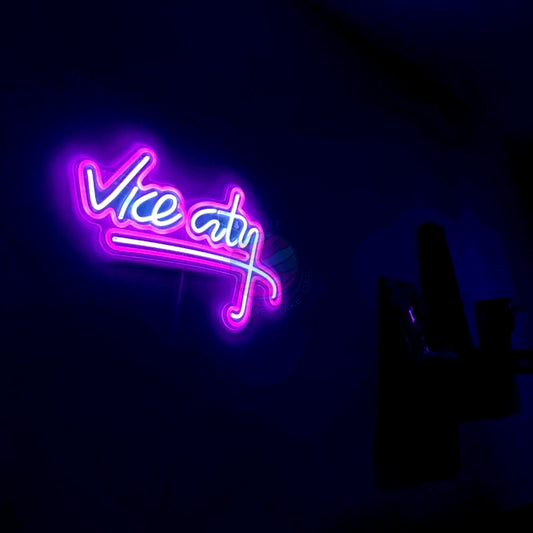
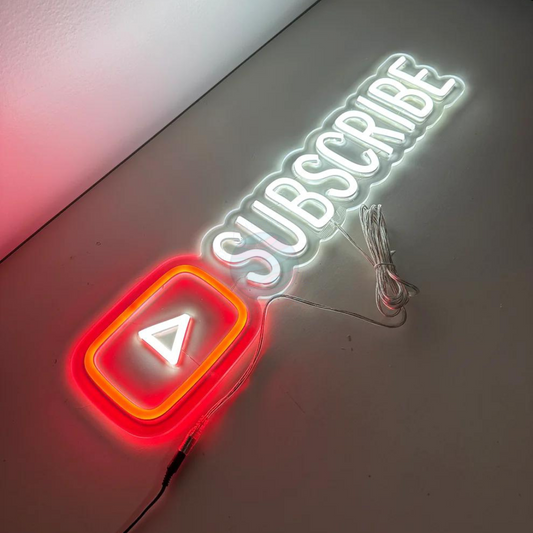
A custom LED neon sign can be designed around text, handwriting, logos, illustrations or a combination of printed and illuminated elements.
Common choices include:
- Text, logo or artwork
- Exact dimensions and proportions
- Single color or color-changing LEDs
- Clear, colored, frosted or printed acrylic
- Contour-cut or rectangular backboard
- Wall mounting or suspended installation
- Dimmer, remote or smart controller options
- Indoor or purpose-built outdoor construction
- Cable exit position and cable color
For logos, provide the cleanest vector artwork available. Vector files help preserve proportions and allow the design to be scaled without losing edge quality.
15. LED neon sign buyer’s checklist
Before ordering, confirm the following:
- Final dimensions: width and height, not only a general size label.
- Design proof: exact layout, spelling, color and proportions.
- Backboard: shape, color, thickness and mounting holes.
- Power compatibility: plug type and input voltage for your country.
- Controls: dimmer, remote, RGB controller or other accessories.
- Intended environment: indoor, sheltered or fully outdoor.
- Mounting method: hardware supplied and wall requirements.
- Lead time: production time and shipping time are separate.
- Warranty: coverage period, exclusions and claim process.
- Packaging: especially important for large or multi-piece signs.
For custom products, review the final proof carefully. The approved artwork usually determines what is manufactured.
16. Frequently asked questions
Is LED neon real neon?
It is a modern alternative designed to reproduce the visual effect of neon. It uses LEDs and a diffuser rather than gas-filled glass tubes.
Do LED neon signs get hot?
The illuminated tubing normally produces relatively little heat, although the power supply and electrical components can become warm. They should have ventilation and should not be covered.
Can I leave an LED neon sign on overnight?
Many signs are designed for extended operation, but follow the manufacturer’s instructions and inspect the power system. Turning the sign off when it is not needed reduces operating hours and energy use.
Can LED neon signs be dimmed?
Often yes, provided the sign and dimmer are compatible. Some color-changing systems use a dedicated controller instead of a simple dimmer.
Can an LED neon sign change colors?
Only if it is built with RGB or another multi-channel lighting system. A single-color sign cannot change to unrelated colors through a standard dimmer.
Are LED neon signs noisy?
The sign itself should normally operate quietly. Buzzing can indicate a power-supply, dimmer or compatibility issue.
Why is part of my sign flickering?
Possible causes include a loose connector, damaged wire, incompatible dimmer, overloaded power supply or fault in an LED section. Disconnect it and follow the seller’s troubleshooting process.
Why does one section look darker?
Uneven brightness can be caused by voltage drop, wiring layout, a damaged section or natural differences in tight curves and construction. A noticeable new change should be inspected.
Can LED neon signs be repaired?
Many faults can be repaired by replacing a power supply, connector or illuminated section. Repairability depends on how the sign was constructed and whether compatible parts are available.
Can I cut or reshape the tubing myself?
Not on a finished sign. Cutting or bending it can damage the circuit, insulation and waterproofing and may void the warranty.
Are LED neon signs waterproof?
Not automatically. Only use a sign outdoors when the complete product is specifically rated and installed for the intended environment.
Can I use an indoor sign in a bathroom?
Bathrooms can expose electrical products to humidity and splashes. Use only a product approved for that location and keep power components outside wet zones.
Can I hang a sign in a window?
Yes, if it is securely mounted and protected from excessive heat, direct weather exposure and cable strain. Strong daylight may reduce its apparent brightness.
What is the best backboard shape?
Contour-cut acrylic looks minimal and follows the design. A rectangle is often easier to mount and can make complex artwork feel more unified.
Does clear acrylic disappear on the wall?
It becomes less noticeable from a normal viewing distance, but it remains visible through reflections, edges and mounting hardware.
What file should I provide for a custom logo?
A vector file such as AI, EPS, SVG or a vector PDF is ideal. A large, clean image can also help when vector artwork is unavailable.
Can every logo be turned into LED neon?
Most can be adapted, but very fine details, gradients and tiny text may need simplification or printed elements.
How is a large sign shipped?
Large signs may be divided into sections to reduce shipping risk and package size. Confirm the number of pieces and connection method before approving the design.
How much does a custom LED neon sign cost?
Price is influenced by dimensions, design complexity, illuminated length, number of colors, backboard, controls, outdoor construction and shipping.
Does a larger sign always use more electricity?
Usually, because it often contains more illuminated tubing, but wattage also depends on LED density, brightness and design coverage.
What happens if the power supply is too small?
The sign may flicker, dim, shut down or overheat the power supply. Use a unit specified for the sign’s voltage and load.
Can I use a different power supply?
Only when its input, output voltage, polarity, connector and capacity are all compatible. Ask the manufacturer when uncertain.
How should I store the sign?
Keep it dry, protected from impact and supported so the acrylic does not bend. Avoid tightly winding cables or placing weight on the tubing.
How do I photograph an LED neon sign?
Reduce brightness with the dimmer, lower the camera exposure and avoid strong competing light. This helps preserve the color and shape instead of producing an overexposed glow.
What should a warranty cover?
Coverage varies. Read whether it applies to the illuminated sign, power supply, controller, shipping damage, accidental damage and outdoor exposure, and note the required claim evidence.
Final thoughts
A well-made LED neon sign is more than an LED strip attached to acrylic. Its quality depends on design translation, materials, electrical sizing, hand assembly, testing and packaging.
Choose a sign by confirming its exact dimensions, intended environment, power system, mounting method and warranty—not only by comparing the lowest price. With correct installation and sensible care, LED neon can provide a durable, efficient and highly customizable focal point for a home, event or business.
Product specifications vary. Always follow the instructions, ratings and warranty terms provided with your specific sign.