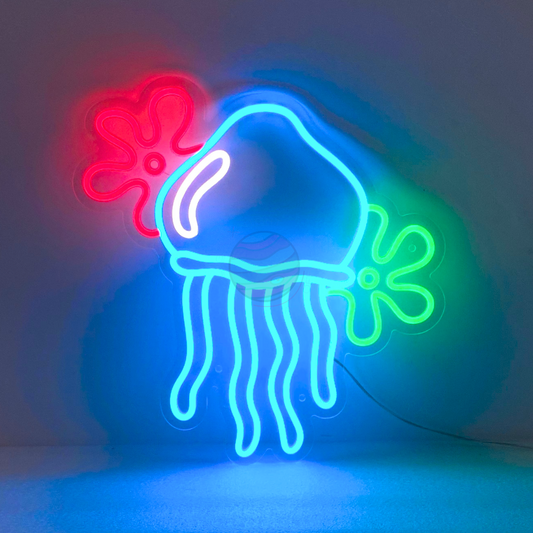
Business Neon Signs: More Than Wall Decoration
A business neon sign can decorate a wall—but that is only the beginning of what it can do.
Placed correctly, a custom LED neon sign can become a brand anchor, a photo backdrop, a recognizable element in every social video, a focal point inside the customer journey and a consistent visual asset across multiple locations.
That is why the best business signs are not selected as isolated decorations. They are planned as part of the brand experience.
A business neon sign does not stop working when the customer leaves the room. It continues in every photo, video, review and post that carries the brand with it.
This guide explains how businesses can use custom LED neon beyond wall decoration—and how the Light X Night B2B Program supports projects ranging from several branded signs to large-scale production partnerships.
A Physical Sign With a Digital Life
Traditional wall decoration mainly affects the people physically standing in the room. A branded neon sign can travel much further.
It may appear behind the reception desk, in a customer selfie, inside a product demonstration, behind a podcast guest, in a short-form video, on a review page or in the background of a staff photo. One physical installation can become part of hundreds of digital touchpoints without requiring a new design for every post.
This does not mean every sign automatically becomes a marketing tool. Placement, scale, color, readability and camera performance all matter. But when those decisions are made intentionally, the sign becomes an asset that connects the physical space to the brand’s online presence.
Seven Jobs One Business Neon Sign Can Perform
1. Create an Immediate Brand Anchor
Customers should not need to search the room to understand where they are. A well-positioned logo, name or brand message gives the space a visual center.
This is particularly valuable in reception areas, showrooms, studios, cafés, bars, garages and retail spaces where the customer’s first few seconds shape the entire impression.
2. Turn an Empty Wall Into a Branded Background
An unused wall can become a permanent content set. Staff introductions, product videos, customer deliveries, interviews and behind-the-scenes footage can all carry the brand naturally in the background.
Instead of adding a logo digitally to every piece of content, the environment itself becomes branded.
3. Create a Customer Photo Moment
People photograph spaces that give them a reason to stop. A visually strong sign can create that reason.
The most effective photo areas usually combine the sign with enough standing distance, a clean surrounding wall, flattering light and a message or logo that makes sense inside a photograph. The objective is not merely to install a bright object. It is to design a scene customers want to capture.
4. Guide Attention Through the Space
Light naturally attracts the eye. Businesses can use that to highlight a reception point, product wall, service counter, waiting area, display vehicle, stage or checkout zone.
A sign should not replace required directional or safety signage, but it can support the visual hierarchy of the space and help customers understand where the main experience begins.
5. Strengthen Atmosphere Without Hiding the Brand
Generic mood lighting can make a room feel better, but it does not necessarily make the business more memorable. A custom neon logo combines atmosphere with ownership: the color and glow improve the space while the design reinforces who the space belongs to.
6. Support Events, Pop-Ups and Exhibitions
A properly planned sign can move beyond a permanent wall. It may be used at trade shows, vehicle events, launches, temporary retail spaces, conferences, weddings, creator events or branded activations.
Portable use requires planning for dimensions, weight, packaging, power access, mounting and transport. Those details should be discussed before production rather than improvised after delivery.
7. Keep Multiple Locations Visually Consistent
For growing businesses, consistency becomes more difficult with every new branch. A structured sign program can help standardize logo proportions, colors, mounting style, cable position and visual scale across locations.
The signs do not always need to be identical in size. A compact branch and a large flagship location may require different dimensions while still following the same brand system.
Where a Business Neon Sign Can Create the Most Value
| Location | Primary Purpose | Planning Priority |
|---|---|---|
| Reception wall | First impression and brand recognition | Visibility from the entrance and clean cable routing |
| Behind a counter | Constant brand exposure | Correct height above staff and equipment |
| Product or vehicle display | Connect the product to the business identity | Avoid glare and visual competition with the display |
| Photo wall | Customer-generated content | Camera framing, standing distance and readable scale |
| Studio or podcast set | Permanent branding inside content | Dimming control and exposure on camera |
| Event booth | Recognition in a crowded environment | Portability, mounting, packing and available power |
| Multiple branches | Consistent visual identity | Standardized files, colors and installation plans |
Why a Branded Sign Works Differently From a Generic Quote
A generic phrase can create atmosphere and still be useful. But a logo, business name or recognizable brand message performs a different role.
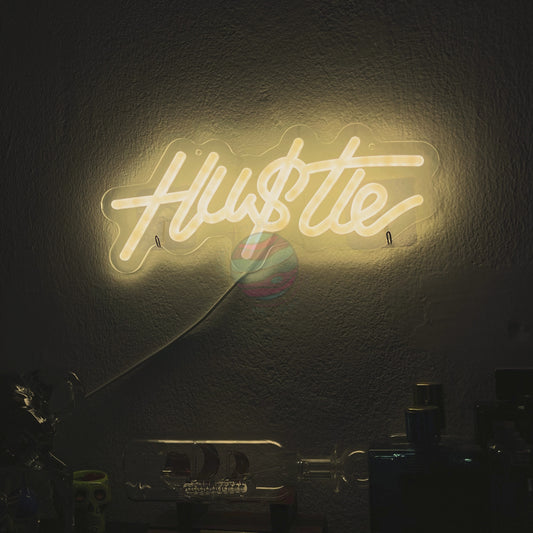
When a customer photographs a generic quote, the image may travel without any connection to the business. When the brand is integrated into the design, the content remains attributable after it leaves the physical location.
For that reason, many businesses combine two types of signs:
- A primary logo sign for recognition and authority.
- A secondary phrase or icon for personality and customer interaction.
The primary sign explains who you are. The secondary sign gives people another reason to engage with the space.
Business Neon Signs by Industry
Automotive Studios, Detailers, Tuners and Garages
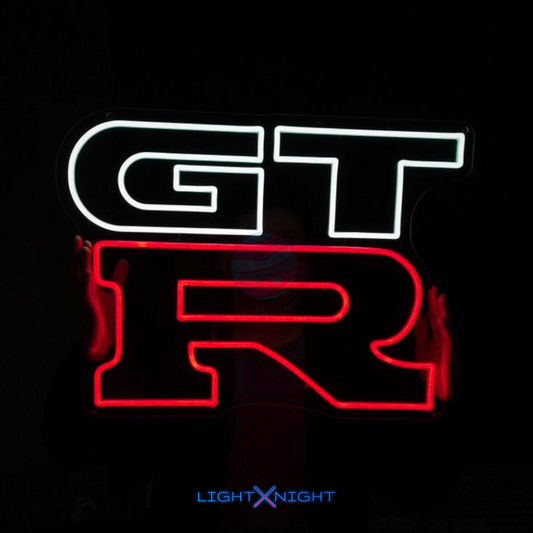
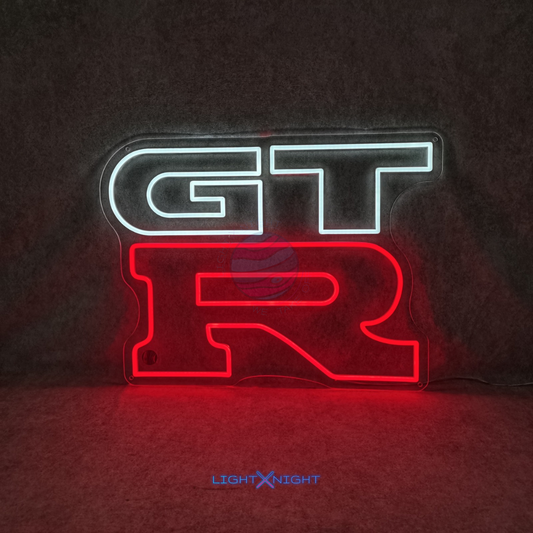
Automotive spaces produce naturally visual content: completed vehicles, customer deliveries, detailing results, builds, wheels, wraps and performance upgrades. A sign positioned behind the main presentation area can brand every reveal without covering the vehicle.
Important considerations include viewing distance, reflections on paint, wall width and whether the sign will appear above a vehicle, beside it or behind it.
Cafés, Bars and Restaurants
Hospitality signs can reinforce the venue name, identify a signature area or create a photographable moment away from busy service zones.
The installation environment matters. Heat, steam, grease, humidity and cleaning routines should be considered before choosing the location. A standard indoor sign should not be treated as waterproof. Review our indoor vs. outdoor LED neon guide before planning exposed or high-moisture installations.
Retail Stores and Showrooms
A neon logo can help frame a hero product wall, fitting area, collection launch or checkout zone. The best placement supports the products rather than overpowering them.
For multi-location retail, repeatable dimensions and installation templates can simplify expansion and maintain a recognizable look.
Beauty, Fitness and Wellness Spaces
Salons, gyms, barbershops and studios often rely on transformation content, mirrors and customer photographs. A sign can become part of the environment customers associate with the service.
It should be positioned carefully around mirrors and cameras to reduce distracting reflections and maintain readable exposure.
Creators, Studios and Podcast Sets
For creators, the sign may appear more often on camera than it is viewed in person. That changes the design priorities.
Dimming capability, background depth, camera crop, color balance and the distance between the subject and sign become essential. A sign that looks excellent at full brightness in person may need to run at a lower setting for clean video exposure.
Corporate Offices and Branded Lounges
Corporate signage can make reception areas, meeting spaces, employee events and presentation zones feel more connected to the brand. The design can range from a restrained white logo to a multi-color installation, depending on the environment.
Events, Pop-Ups and Brand Activations
Temporary installations need more than an attractive design. They need a practical system for transport, setup, power, storage and repeated use.
Tell the project team in advance when a sign needs to travel. That information can affect size, segmentation, packaging and mounting decisions.
Designing for the Room and the Camera
A business sign often serves two audiences at the same time: the customer standing in the room and the viewer watching through a screen.
To work for both, consider:
- Viewing distance: Fine details disappear when the sign is viewed from across a showroom.
- Camera framing: A sign can be physically large and still be cropped out of vertical video.
- Brightness control: Dimming helps balance the sign with faces, products and ambient light.
- Wall contrast: The selected color should remain visible against the surface behind it.
- Negative space: Crowding a sign between shelves, screens or decorations weakens its impact.
- Cable position: The cleanest installation begins with planning the nearest practical power route.
- Reflection: Glass, mirrors, polished vehicles and glossy surfaces may duplicate or distort the light.
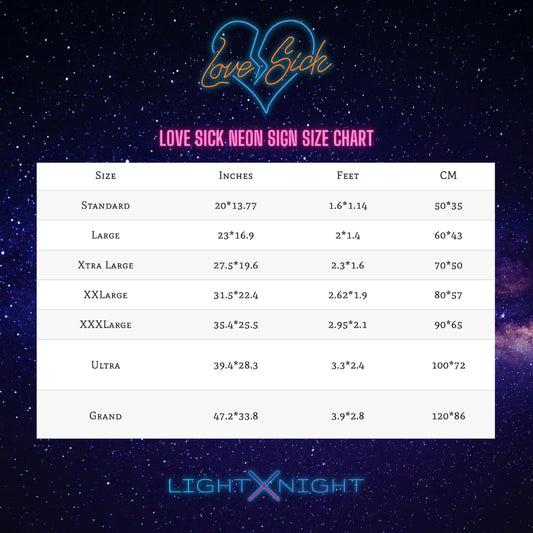
For detailed dimension planning, use the Light X Night LED neon size guide.
Choosing the Right Size for a Business Sign
The correct size is not determined only by the dimensions of the logo file. It depends on the wall, viewing distance, surrounding furniture, expected camera crop and the visual authority the sign needs to carry.
Before requesting a quote, measure:
- The available wall width and height.
- The distance from the main customer entrance.
- The distance from the primary camera or photo position.
- The height of counters, vehicles, products or furniture below the sign.
- The nearest suitable power location.
It is also useful to send a straight photograph of the wall with one known measurement. That gives the design team a more realistic understanding of proportion than a logo file alone.
Color Is a Brand Decision and a Performance Decision
The most accurate brand color on a screen is not always the color that creates the strongest physical result in every environment. Wall color, daylight, surrounding fixtures and camera settings can influence how the sign is perceived.
A business project should consider whether the priority is:
- Maximum recognition of existing brand colors.
- High contrast in a bright room.
- A warmer atmosphere in hospitality.
- Clean exposure in video.
- A restrained corporate appearance.
- A multi-color centerpiece for a flagship space.
Light X Night signs include dimming control unless a specific project specification states otherwise, allowing the output to be adapted to the environment.
Indoor, Outdoor and Semi-Exposed Locations
Do not assume that a sign is suitable for rain because an individual LED component is described as water-resistant. Outdoor suitability depends on the complete system, including the sign, connections, cable exits, controller, power supply and installation method.
Standard indoor signs should be installed in dry indoor environments. Outdoor, bathroom, poolside, covered-balcony or high-humidity projects should be discussed before production so the correct requirements can be evaluated.
Electrical components must also remain accessible, ventilated and protected according to the project instructions. Read the LED neon sign safety guide before installation.
Scaling From One Location to a Sign Program
A single custom sign is a design project. A rollout across branches is a system.
Before producing a larger quantity, businesses should define:
- The approved master artwork.
- Permitted size variations.
- Color specifications.
- Backboard contour and finish.
- Mounting-hole placement.
- Cable-exit direction.
- Power and plug requirements by destination.
- Packaging and labeling needs.
- Whether units ship together or directly to separate locations.
This preparation reduces inconsistency and helps each new location feel like part of the same brand rather than a separate interpretation.
The Light X Night B2B Program
The Light X Night B2B Program is designed for businesses, creators, designers, retailers, resellers and organizations that require more than a single standard purchase.
Projects can be structured around different volume levels:
- 3+ signs: Suitable for small businesses, coordinated spaces or compact rollouts.
- 10+ signs: Designed for growing operations and multiple locations.
- 50+ signs: Suitable for retail partners, resellers and larger programs.
- 1000+ signs: Full-scale production partnerships can be evaluated.
Final pricing and production planning depend on the artwork, size, illuminated complexity, quantity, electrical requirements, packaging, delivery destinations and timeline. Quantity alone does not determine the complete project cost.

What a Light X Night Business Project Can Include
- Custom branding based on a logo, name, message or approved campaign artwork.
- Design review for proportions, line thickness, physical production and readability.
- Premium Gen 4 LED neon construction.
- Hand assembly and finishing for the completed design.
- A complete-sign inspection through our quality-control process.
- Dimming control and installation accessories according to the project specification.
- Protective packaging planned around the sign’s shape and vulnerable areas.
- Expedited international shipping options through FedEx or DHL.
- Direct B2B guidance for quantities, locations and rollout planning.
- A two-year warranty on the neon sign itself for covered technical or manufacturing failures, subject to the warranty terms.
The exact scope is confirmed for each project. Large or technically unusual installations may require additional planning, local professional installation or project-specific components.
Why Quality Matters More in a Business Environment
A personal sign can be replaced when convenient. A business sign may sit behind the counter, appear in paid content, represent the company during an event or be repeated across several branches.
That raises the cost of inconsistency. Uneven illumination, visible hotspots, poor proportions, unreliable connections or weak packaging do not affect only the product—they affect the environment and the brand presentation around it.
This is why business buyers should evaluate the complete product system rather than compare only dimensions and checkout price. Our guide to cheap vs. premium LED neon signs explains the differences in materials, electrical planning, assembly, testing, packaging and support.
How to Think About Value Without Inventing ROI
No responsible supplier can promise that installing a neon sign will create a fixed number of sales, views or customer posts. Results depend on the business, location, content strategy, audience and execution.
A more useful way to evaluate the investment is to ask how many roles the sign can perform:
- Does it identify the business inside the space?
- Will it appear in regular photos or videos?
- Can customers use it as a recognizable photo area?
- Will it support launches, events or exhibitions?
- Can the same design be repeated across branches?
- Does it replace multiple temporary backdrops or printed graphics?
- Will it remain relevant when campaigns change?
The strongest value often comes from repeated use. A sign that becomes part of the daily environment can support the brand far beyond a one-time installation moment.
Business Neon Project Checklist
To receive a more accurate B2B proposal, prepare the following information:
- Business name and industry.
- Logo or artwork: Vector files are preferred, but high-resolution images can also be reviewed.
- Quantity: Include the current requirement and possible future rollout.
- Target dimensions: Provide the preferred size or the wall measurements.
- Installation environment: Indoor, outdoor, semi-exposed, humid or event use.
- Wall photographs: Straight images with at least one known measurement.
- Preferred colors and backboard style.
- Cable and power requirements.
- Delivery destinations: One central address or multiple locations.
- Required date: Include installation or event deadlines, not only the desired shipping date.
- Packaging needs: Especially for resellers, events or repeated transport.
The more complete the project information is at the beginning, the more accurately the design, production and delivery plan can be prepared.
Frequently Asked Questions
Can Light X Night create a neon sign from our company logo?
Yes. The artwork is reviewed and adapted for physical LED neon production. Very thin details, small gaps or complex gradients may require adjustments to preserve readability and production quality.
Do you offer volume pricing for businesses?
Yes. The B2B program supports projects beginning at three signs, with additional structures for 10+, 50+ and large-scale quantities. The final proposal depends on the complete specification, not quantity alone.
Can every location receive a different size?
Yes. A rollout can use several approved dimensions while preserving the same logo proportions, color direction and general construction standard.
Can signs be shipped directly to different branches?
Multi-destination delivery can be discussed during project planning. Shipping structure, labeling, destination requirements and costs should be confirmed before production.
Can the sign be used as a video or podcast background?
Yes. Dimming control, sign size, camera framing, distance from the subject and surrounding light should be planned for the intended set.
Are business signs suitable for outdoor installation?
Only when the project is specified and prepared for the intended outdoor environment. Standard indoor signs should not be exposed to rain or uncontrolled moisture.
Can you create signs for events and trade shows?
Yes. Tell the B2B team that the sign must travel so portability, segmentation, packaging, mounting and setup can be considered before production.
What comes with a business neon sign?
The included components depend on the project specification. Standard Light X Night packages generally include the sign, appropriate power components, dimming control and installation hardware unless otherwise confirmed.
Is installation included?
Worldwide delivery does not automatically include local installation. Many signs are designed for straightforward mounting, while large, elevated, hardwired or complex commercial installations should be completed by a qualified local professional.
How long does a B2B project take?
Timing depends on design approval, quantity, complexity, production capacity, packaging, destination and shipping method. Event or opening dates should be provided as early as possible so feasibility can be assessed.
What warranty is included?
Light X Night provides a two-year warranty on the neon sign itself for covered technical or manufacturing failures, subject to the warranty terms. Physical damage, misuse, unsuitable environments, incorrect installation and unauthorized modification are not treated as manufacturing defects.
Build a Sign That Keeps Working After Installation
A business neon sign should do more than fill an empty wall. It should help customers recognize the brand, help the team create better content, strengthen the atmosphere and remain useful across daily operations, campaigns and future locations.
The strongest projects begin with context: where the sign will be seen, how it will be photographed, how often it will move, what environment it must handle and how the business plans to grow.
Bring Light X Night the logo, the space and the objective. We will help translate them into a physical Gen 4 LED neon system built around the project—not pulled from a generic shelf.